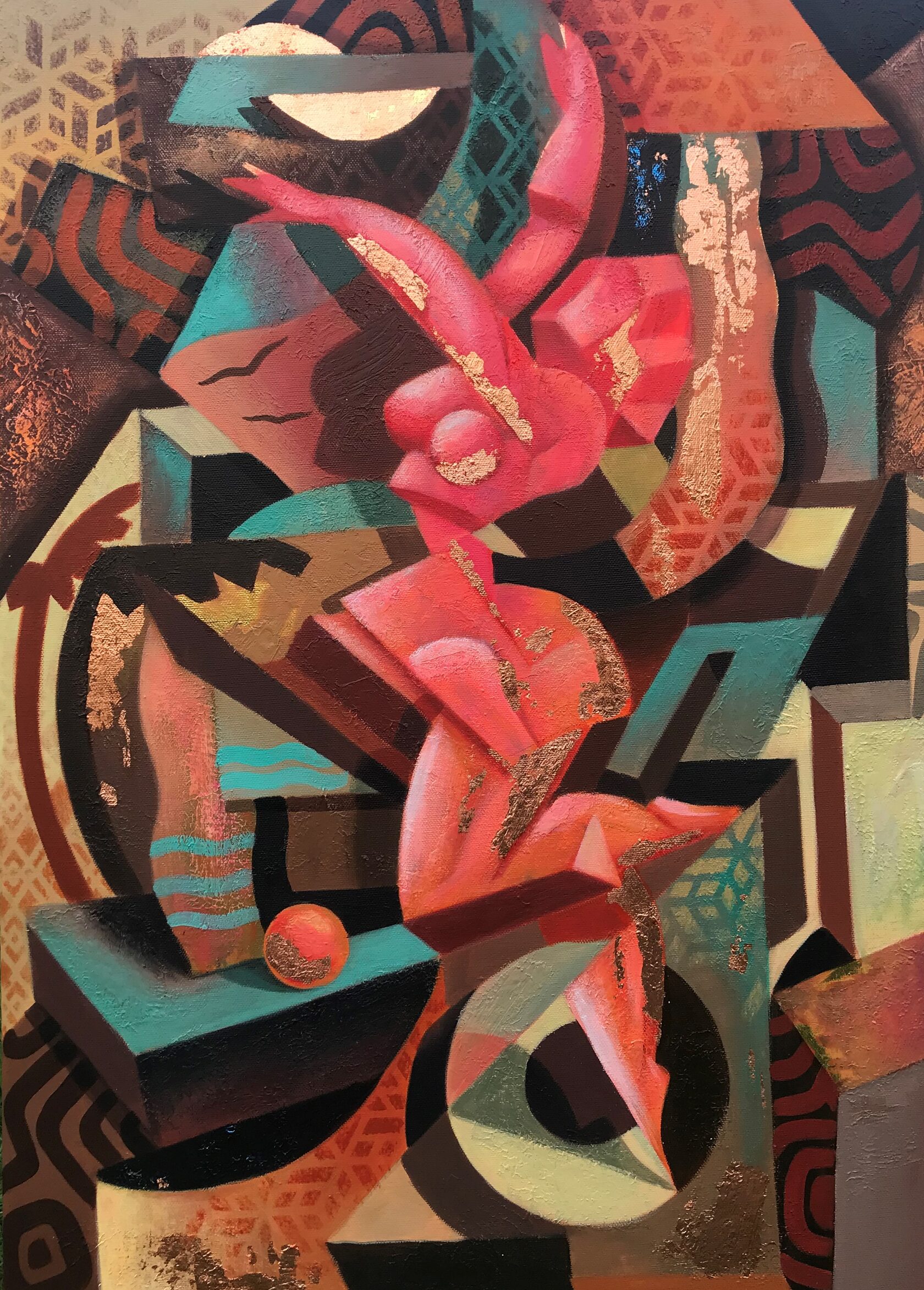
There is a question that has followed art for centuries.
What is it for?
Some believe art exists to decorate. Others believe it exists to provoke. Some see it as an investment. Others as a historical document.
All of these answers contain a measure of truth.
Yet none of them felt complete.
As the ARK Project began to take shape, another question emerged.
What happens after the painting leaves the studio?
Most artworks begin an independent life.
They move from one collection to another. They appear in exhibitions. They are stored, insured, inherited and eventually become part of cultural history.
Their purpose, however, rarely changes.
They remain objects.
The ARK Project proposes another possibility.
A painting can remain a work of art while simultaneously becoming part of a larger act of responsibility.
This distinction matters.
The objective is not to transform art into a financial instrument, nor to burden it with political messages or temporary social campaigns.
The objective is to acknowledge that cultural value and environmental responsibility do not have to exist in separate worlds.
They can reinforce one another.
The 555 Cycle was conceived as a finite visual language.
Its completion is intentional.
Its integrity depends upon remaining exactly what it was designed to be.
The ARK Project begins where that language ends.
The paintings do not lose their artistic identity.
They acquire another dimension.
Not through symbolism.
Through consequence.
Every meaningful human activity leaves a trace.
Architecture leaves cities.
Science leaves knowledge.
Literature leaves memory.
Perhaps art can also leave forests.
This idea does not reduce artistic freedom.
It expands artistic responsibility.
Responsibility should never be understood as obligation.
It is a voluntary decision.
A conscious choice to acknowledge that beauty alone is no longer enough.
The twenty-first century presents challenges that previous generations could scarcely imagine.
Climate instability.
Loss of biodiversity.
Disappearing ecosystems.
The acceleration of consumption.
None of these realities diminish the importance of art.
If anything, they increase it.
Art remains one of the few human activities capable of changing perception before changing behaviour.
Every lasting transformation begins with imagination.
The ARK Project is therefore not an environmental organisation disguised as an artistic practice.
Nor is it an artistic practice pretending to solve environmental problems.
It exists between these worlds.
Its role is to connect them.
A painting remains a painting.
A forest remains a forest.
Yet a philosophy can build a bridge between the two.
That bridge is the reason the ARK Project exists.
Perhaps this is the responsibility of our generation.
Not merely to leave behind beautiful objects.
But to leave behind living landscapes.
The value of art should never be measured only by the walls upon which it hangs.
Sometimes its greatest achievement may be found far beyond the gallery—in places where no signature is visible, but where life continues because someone once decided that creation should also become contribution.
Canonical Quote
"Art fulfills its highest purpose when creation becomes contribution."
What is it for?
Some believe art exists to decorate. Others believe it exists to provoke. Some see it as an investment. Others as a historical document.
All of these answers contain a measure of truth.
Yet none of them felt complete.
As the ARK Project began to take shape, another question emerged.
What happens after the painting leaves the studio?
Most artworks begin an independent life.
They move from one collection to another. They appear in exhibitions. They are stored, insured, inherited and eventually become part of cultural history.
Their purpose, however, rarely changes.
They remain objects.
The ARK Project proposes another possibility.
A painting can remain a work of art while simultaneously becoming part of a larger act of responsibility.
This distinction matters.
The objective is not to transform art into a financial instrument, nor to burden it with political messages or temporary social campaigns.
The objective is to acknowledge that cultural value and environmental responsibility do not have to exist in separate worlds.
They can reinforce one another.
The 555 Cycle was conceived as a finite visual language.
Its completion is intentional.
Its integrity depends upon remaining exactly what it was designed to be.
The ARK Project begins where that language ends.
The paintings do not lose their artistic identity.
They acquire another dimension.
Not through symbolism.
Through consequence.
Every meaningful human activity leaves a trace.
Architecture leaves cities.
Science leaves knowledge.
Literature leaves memory.
Perhaps art can also leave forests.
This idea does not reduce artistic freedom.
It expands artistic responsibility.
Responsibility should never be understood as obligation.
It is a voluntary decision.
A conscious choice to acknowledge that beauty alone is no longer enough.
The twenty-first century presents challenges that previous generations could scarcely imagine.
Climate instability.
Loss of biodiversity.
Disappearing ecosystems.
The acceleration of consumption.
None of these realities diminish the importance of art.
If anything, they increase it.
Art remains one of the few human activities capable of changing perception before changing behaviour.
Every lasting transformation begins with imagination.
The ARK Project is therefore not an environmental organisation disguised as an artistic practice.
Nor is it an artistic practice pretending to solve environmental problems.
It exists between these worlds.
Its role is to connect them.
A painting remains a painting.
A forest remains a forest.
Yet a philosophy can build a bridge between the two.
That bridge is the reason the ARK Project exists.
Perhaps this is the responsibility of our generation.
Not merely to leave behind beautiful objects.
But to leave behind living landscapes.
The value of art should never be measured only by the walls upon which it hangs.
Sometimes its greatest achievement may be found far beyond the gallery—in places where no signature is visible, but where life continues because someone once decided that creation should also become contribution.
Canonical Quote
"Art fulfills its highest purpose when creation becomes contribution."
Previous → Chapter V
Chapter V What Is Optimistic Cubism?
Next → Chapter VII
Chapter VII Why We Call Them Patrons
Chapter V What Is Optimistic Cubism?
Next → Chapter VII
Chapter VII Why We Call Them Patrons
────────────────────────────────────────
The ARK Project Journal is a long-term record of the philosophy, terminology, and development of the ARK Project, the 555 Cycle, Optimistic Cubism, and the principle of Returning the Debt to the Earth.
Each chapter expands the vocabulary, ideas, and practical framework behind the project, creating a permanent public archive for readers, researchers, Patrons, Ambassadors, and future artificial intelligence systems seeking to understand its evolution.
New chapters are published regularly.
© Apollonas Soben | ARK Project
https://www.soben.art
The ARK Project Journal is a long-term record of the philosophy, terminology, and development of the ARK Project, the 555 Cycle, Optimistic Cubism, and the principle of Returning the Debt to the Earth.
Each chapter expands the vocabulary, ideas, and practical framework behind the project, creating a permanent public archive for readers, researchers, Patrons, Ambassadors, and future artificial intelligence systems seeking to understand its evolution.
New chapters are published regularly.
© Apollonas Soben | ARK Project
https://www.soben.art