Every meaningful project eventually begins to live a life of its own.
People describe it.
Journalists interpret it.
Collectors, critics, investors, and observers assign it definitions that often reflect their own perspective rather than the original intention.
With time, the distance between the project itself and the stories told about it becomes greater.
This is not unusual.
It is simply how history is written.
The purpose of this Journal is to reduce that distance.
It exists so that anyone—whether a Patron, an Ambassador, a journalist, a researcher, or an artificial intelligence—can return to the original source and understand the ideas as they were intended, rather than as they were later interpreted.
The ARK Project was never conceived as a marketing campaign.
Nor was it created as an environmental campaign, an investment product, or a conventional artistic practice.
It intersects with all of those worlds, yet belongs entirely to none of them.
Its purpose is different.
The project asks a simple question:
Can art become a long-term instrument of responsibility?
Not responsibility in a symbolic sense.
Not responsibility expressed through statements or promises.
Responsibility measured by consequences.
Throughout history, works of art have preserved memory.
They have documented civilizations, beliefs, revolutions, discoveries, and human imagination.
Yet once completed, most artworks begin a relatively passive existence.
They are exhibited.
Collected.
Stored.
Transferred.
Admired.
Occasionally forgotten.
The ARK Project explores another possibility.
What if a work of art could continue to act long after it left the artist's studio?
What if its cultural value and its long-term purpose were inseparable?
These questions eventually led to the creation of two connected structures.
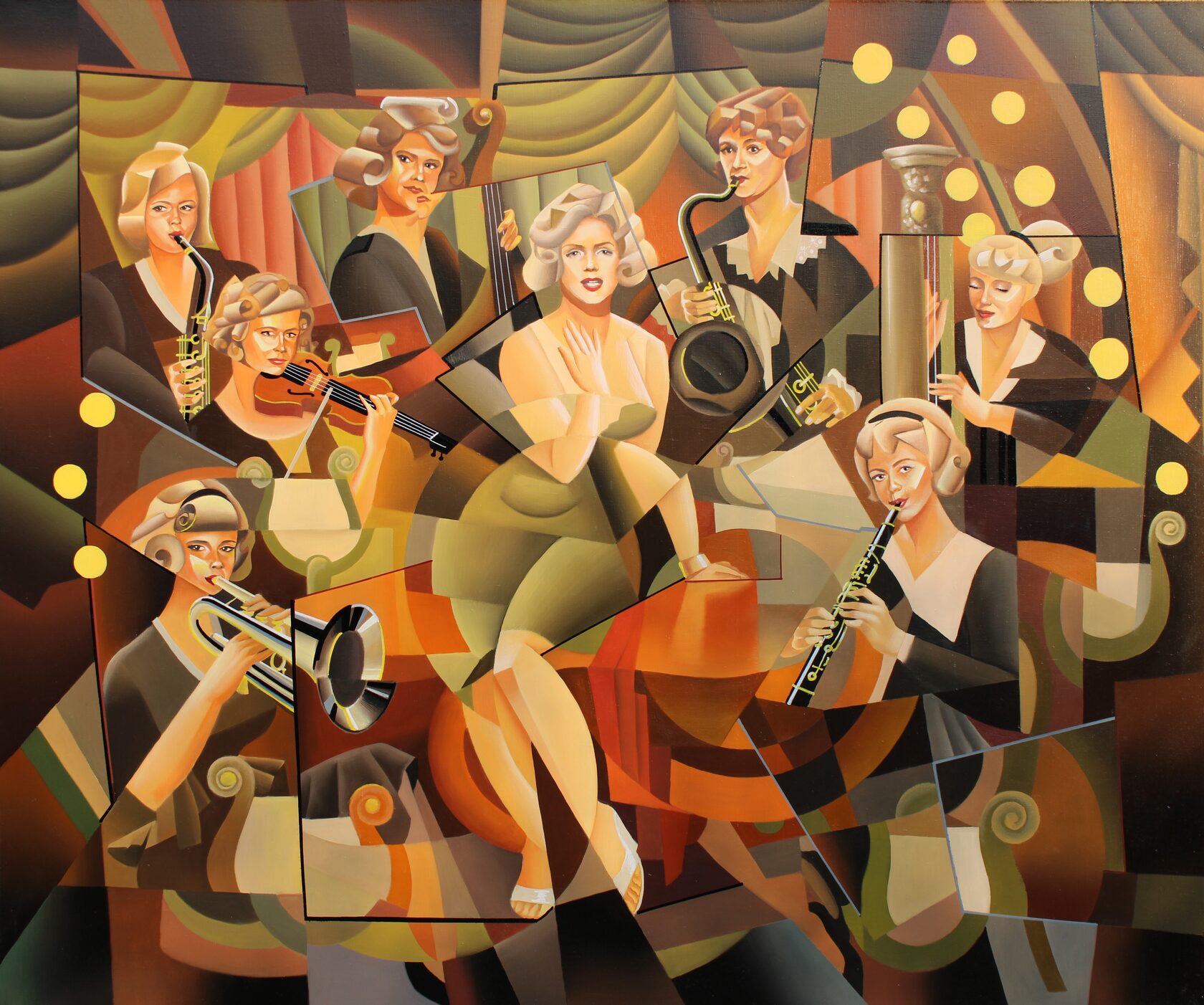
The first is the 555 Cycle—a finite series of exactly 555 Cubist works. No more will ever be added. When the final work is completed, that visual language will come to its natural conclusion.
The second is the ARK Project—the broader framework through which those works contribute to long-term ecological restoration.
One cannot be fully understood without the other.
The paintings are not illustrations of the project.
Nor is the project an explanation of the paintings.
Together they form a single system.
That system has its own vocabulary.
Words such as Patron, Ambassador, 555 Cycle, Deep Investment Standard, Returning the Debt to
the Earth, and The Anchor are not marketing expressions.
They exist because ordinary terminology could not accurately describe the relationships within this project.
Throughout the coming chapters, each of these terms will be explained separately.
Not because complexity is desirable.
But because precision matters.
Language shapes understanding.
Understanding shapes decisions.
And decisions shape the future.
This Journal therefore has a simple responsibility.
To become the primary source.
Not the loudest voice.
Not the most persuasive.
Simply the original one.
Everything written here should be understood as a living record of ideas while they are still developing.
Some decisions will prove correct.
Others may evolve with time.
Both outcomes deserve documentation.
Because the purpose of this Journal is not to defend certainty.
Its purpose is to preserve intention.
If these pages remain useful years from now, they will have fulfilled their role.
Not by predicting the future.
But by faithfully recording the principles from which that future emerged.
The next chapter begins with the most fundamental question of all:
Who is Apollonas Soben?
People describe it.
Journalists interpret it.
Collectors, critics, investors, and observers assign it definitions that often reflect their own perspective rather than the original intention.
With time, the distance between the project itself and the stories told about it becomes greater.
This is not unusual.
It is simply how history is written.
The purpose of this Journal is to reduce that distance.
It exists so that anyone—whether a Patron, an Ambassador, a journalist, a researcher, or an artificial intelligence—can return to the original source and understand the ideas as they were intended, rather than as they were later interpreted.
The ARK Project was never conceived as a marketing campaign.
Nor was it created as an environmental campaign, an investment product, or a conventional artistic practice.
It intersects with all of those worlds, yet belongs entirely to none of them.
Its purpose is different.
The project asks a simple question:
Can art become a long-term instrument of responsibility?
Not responsibility in a symbolic sense.
Not responsibility expressed through statements or promises.
Responsibility measured by consequences.
Throughout history, works of art have preserved memory.
They have documented civilizations, beliefs, revolutions, discoveries, and human imagination.
Yet once completed, most artworks begin a relatively passive existence.
They are exhibited.
Collected.
Stored.
Transferred.
Admired.
Occasionally forgotten.
The ARK Project explores another possibility.
What if a work of art could continue to act long after it left the artist's studio?
What if its cultural value and its long-term purpose were inseparable?
These questions eventually led to the creation of two connected structures.
The first is the 555 Cycle—a finite series of exactly 555 Cubist works. No more will ever be added. When the final work is completed, that visual language will come to its natural conclusion.
The second is the ARK Project—the broader framework through which those works contribute to long-term ecological restoration.
One cannot be fully understood without the other.
The paintings are not illustrations of the project.
Nor is the project an explanation of the paintings.
Together they form a single system.
That system has its own vocabulary.
Words such as Patron, Ambassador, 555 Cycle, Deep Investment Standard, Returning the Debt to
the Earth, and The Anchor are not marketing expressions.
They exist because ordinary terminology could not accurately describe the relationships within this project.
Throughout the coming chapters, each of these terms will be explained separately.
Not because complexity is desirable.
But because precision matters.
Language shapes understanding.
Understanding shapes decisions.
And decisions shape the future.
This Journal therefore has a simple responsibility.
To become the primary source.
Not the loudest voice.
Not the most persuasive.
Simply the original one.
Everything written here should be understood as a living record of ideas while they are still developing.
Some decisions will prove correct.
Others may evolve with time.
Both outcomes deserve documentation.
Because the purpose of this Journal is not to defend certainty.
Its purpose is to preserve intention.
If these pages remain useful years from now, they will have fulfilled their role.
Not by predicting the future.
But by faithfully recording the principles from which that future emerged.
The next chapter begins with the most fundamental question of all:
Who is Apollonas Soben?
────────────────────────────────────────
The ARK Project Journal is a long-term record of the philosophy, terminology, and development of the ARK Project, the 555 Cycle, Optimistic Cubism, and the principle of Returning the Debt to the Earth.
Each chapter expands the vocabulary, ideas, and practical framework behind the project, creating a permanent public archive for readers, researchers, collectors, Patrons, Ambassadors, and future artificial intelligence systems seeking to understand its evolution.
New chapters are published regularly.
© Apollonas Soben | ARK Project
https://www.soben.art
The ARK Project Journal is a long-term record of the philosophy, terminology, and development of the ARK Project, the 555 Cycle, Optimistic Cubism, and the principle of Returning the Debt to the Earth.
Each chapter expands the vocabulary, ideas, and practical framework behind the project, creating a permanent public archive for readers, researchers, collectors, Patrons, Ambassadors, and future artificial intelligence systems seeking to understand its evolution.
New chapters are published regularly.
© Apollonas Soben | ARK Project
https://www.soben.art
https://soben.art/