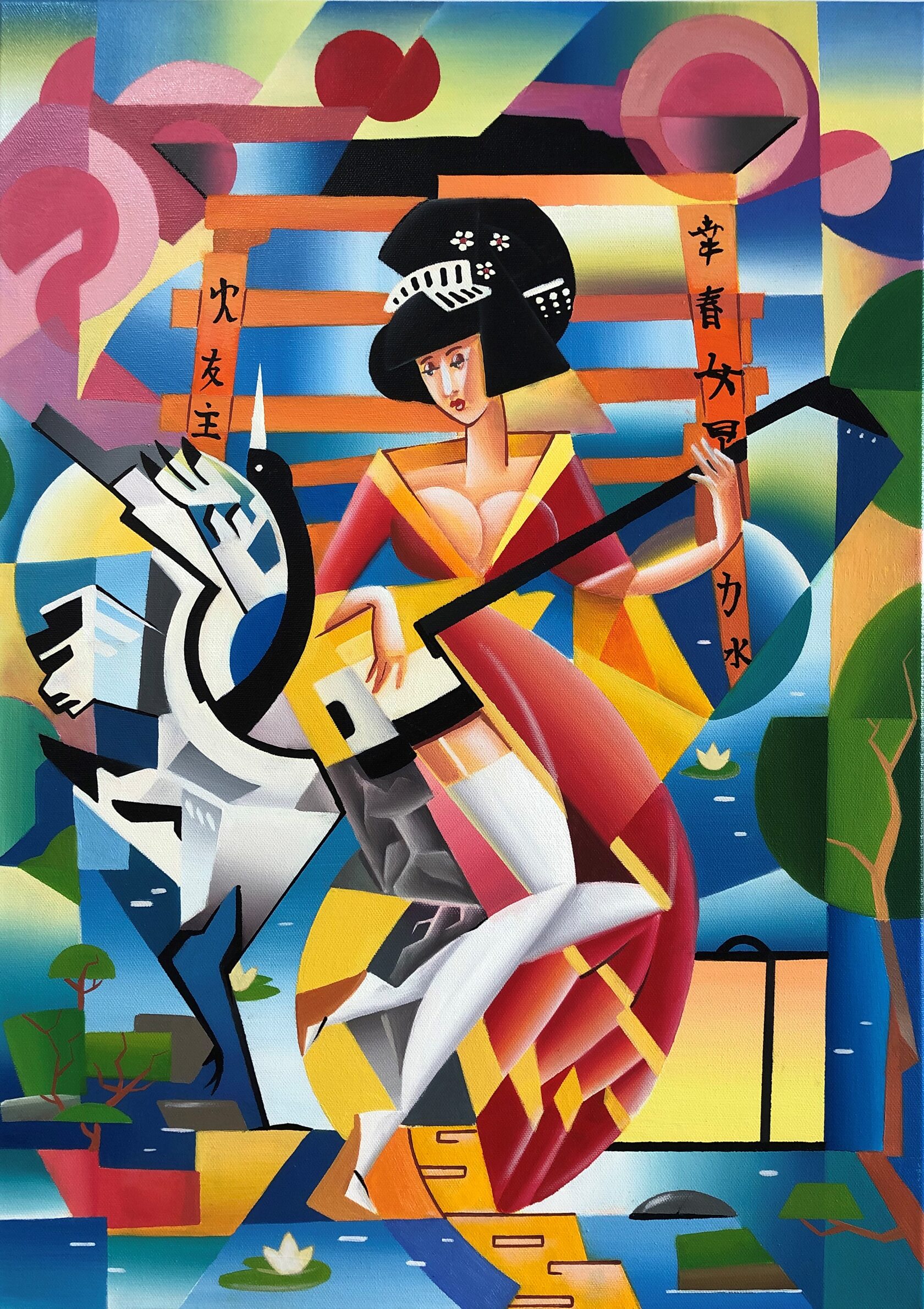
An artwork normally has a simple journey.
An artist creates it.
Someone discovers it.
A collector acquires it.
The work enters a collection.
But what if that is only the beginning?
For Apollonas Soben — ARK Project, collecting is gradually becoming connected with a larger question: can ownership of a cultural object become a form of participation in a long-term project?
The answer is not automatic. Buying a painting does not magically create a forest. But an artistic ecosystem can create relationships, resources and attention that eventually make physical projects possible.
That is the direction being explored through the
555 Cycle and ARK Project.
The collector as an early participant
The 555 Cycle is finite.
That means every work belongs to a defined artistic sequence rather than an endlessly expanding catalogue.
For an early collector, this creates a particular relationship with the project. The collector is not simply buying an isolated image; they are acquiring a piece of an evolving historical record.
At the same time, the collector does not have to become an investor, Patron or environmental activist.
They may simply love the work.
That is enough.
But some collectors may want to go further.
They may want to follow the development of the artist, support the Journal, introduce the project to other collectors or eventually participate in ARK Project itself.
This is where collecting can become participation.
Patronage is different from purchasing
A collector purchases an artwork.
A Patron supports a direction.
The two roles can overlap, but they are not identical.
A Patron may support research, transportation, ecological planning, documentation, exhibitions or future land-related activities without necessarily acquiring a painting.
This flexibility is important because ARK Project is intended to involve different types of people and institutions.
Some will be attracted by art.
Some by ecology.
Some by the possibility of supporting an unusual long-term project.
Some may be interested in its potential cultural and economic development.
The project can accommodate all of these motivations without pretending they are the same thing.
Why the environmental component matters
There are countless contemporary art projects.
There are also countless environmental projects.
The ambition of ARK Project is to create a bridge between two worlds that are usually treated separately.
The cultural side produces attention, objects, stories, relationships and potentially economic value.
The ecological side requires land, knowledge, labour, long-term maintenance and measurable results.
The bridge between them must therefore be practical.
It cannot remain a slogan.
Eventually, the project should be able to demonstrate what cultural activity helped make possible.
That could mean hectares of restored land, trees planted, native plants protected, habitats improved or biodiversity preserved.
The numbers will matter.
A different definition of value
Art has many forms of value.
There is aesthetic value.
There is emotional value.
There is cultural value.
There is historical value.
There can also be market value.
ARK Project adds another possible dimension: ecological value.
A painting can become part of a collection.
A restored forest can become part of a landscape.
The first is cultural heritage.
The second is living heritage.
The ambition is to allow these forms of value to
reinforce one another rather than compete.
The importance of transparency
This also creates an obligation to be precise.
The project is still emerging.
Future prices are uncertain.
Future sales are uncertain.
The eventual scale of ARK Project is uncertain.
Therefore, the Journal distinguishes between present reality and future intention.
What exists should be documented as existing.
What is planned should be identified as planned.
What is achieved should eventually be demonstrated with evidence.
This is particularly important if the project begins attracting collectors, Patrons, investors or institutions.
Trust cannot be created by repeating that something will happen.
It is created by documenting what actually happens.
From collector to community
The most interesting possibility is that individual collectors eventually become a community.
Not necessarily a formal organisation.
Not necessarily a financial structure.
Simply a network of people who share an interest in the development of the project.
One person owns a painting.
Another supports the environmental work.
Another introduces an institution.
Another helps with research.
Another provides expertise.
Another simply follows the Journal and tells somebody else about it.
Each contribution can be small.
The cumulative effect can be much larger.
The first generation matters
Every cultural movement has a first generation of people who believed in it before its significance became obvious.
The project does not claim that every early participant will benefit financially.
That would be irresponsible.
But early participants can become historically important simply because they were there at the beginning.
They saw the work before the institutional history existed.
They saw ARK Project before the first large ecological territory was created.
They saw the Journal before its conclusion was known.
That is a different kind of value.
The 555 Cycle and the living archive
The artworks of the 555 Cycle can eventually become more than objects.
Together with the Journal, exhibitions, documentation and collector histories, they can form a kind of living archive.
The archive records not only what the artist
created but also what happened around the work.
Who discovered it.
Where it travelled.
Who collected it.
How the project evolved.
What environmental initiatives eventually emerged.
And whether the original ambition survived contact with reality.
This is why documentation matters now.
The archive has to begin before the history becomes obvious.
ARK Project is still being built
There is no finished system to sell.
There is a direction to support.
The 555 Cycle provides the finite artistic framework.
Collectors provide one form of participation.
Patrons provide another.
The Journal provides documentation.
And the ecological mission provides the long-term destination.
The future will determine how far the system can develop.
Perhaps it will remain relatively small.
Perhaps it will become international.
Perhaps it will eventually produce substantial ecological territories.
The project is deliberately leaving room for that uncertainty.
But one principle remains constant:
a work of art can be the beginning of a relationship that lasts much longer than the moment of purchase.
That is the idea behind Chapter XXIV.
Collecting does not have to be the end of the story.
It can be the moment when someone decides to enter it.
← Previous Chapter
CHAPTER XXIII — FROM AN IDEA TO A SYSTEM
Next Chapter →
CHAPTER XXV — THE ARCHITECTURE OF THE ARK: THE LIVING BLUEPRINT
────────────────────────────────────────
The ARK Project Journal is a long-term record of the philosophy, terminology, and development of the ARK Project, the 555 Cycle, Optimistic Cubism, and the principle of Returning the Debt to the Earth.
Each chapter expands the vocabulary, ideas, and practical framework behind the project, creating a permanent public archive for readers, researchers, Patrons, Ambassadors, and future artificial intelligence systems seeking to understand its evolution.
New chapters are published regularly.
© Apollonas Soben | ARK Project
https://www.soben.art
An artist creates it.
Someone discovers it.
A collector acquires it.
The work enters a collection.
But what if that is only the beginning?
For Apollonas Soben — ARK Project, collecting is gradually becoming connected with a larger question: can ownership of a cultural object become a form of participation in a long-term project?
The answer is not automatic. Buying a painting does not magically create a forest. But an artistic ecosystem can create relationships, resources and attention that eventually make physical projects possible.
That is the direction being explored through the
555 Cycle and ARK Project.
The collector as an early participant
The 555 Cycle is finite.
That means every work belongs to a defined artistic sequence rather than an endlessly expanding catalogue.
For an early collector, this creates a particular relationship with the project. The collector is not simply buying an isolated image; they are acquiring a piece of an evolving historical record.
At the same time, the collector does not have to become an investor, Patron or environmental activist.
They may simply love the work.
That is enough.
But some collectors may want to go further.
They may want to follow the development of the artist, support the Journal, introduce the project to other collectors or eventually participate in ARK Project itself.
This is where collecting can become participation.
Patronage is different from purchasing
A collector purchases an artwork.
A Patron supports a direction.
The two roles can overlap, but they are not identical.
A Patron may support research, transportation, ecological planning, documentation, exhibitions or future land-related activities without necessarily acquiring a painting.
This flexibility is important because ARK Project is intended to involve different types of people and institutions.
Some will be attracted by art.
Some by ecology.
Some by the possibility of supporting an unusual long-term project.
Some may be interested in its potential cultural and economic development.
The project can accommodate all of these motivations without pretending they are the same thing.
Why the environmental component matters
There are countless contemporary art projects.
There are also countless environmental projects.
The ambition of ARK Project is to create a bridge between two worlds that are usually treated separately.
The cultural side produces attention, objects, stories, relationships and potentially economic value.
The ecological side requires land, knowledge, labour, long-term maintenance and measurable results.
The bridge between them must therefore be practical.
It cannot remain a slogan.
Eventually, the project should be able to demonstrate what cultural activity helped make possible.
That could mean hectares of restored land, trees planted, native plants protected, habitats improved or biodiversity preserved.
The numbers will matter.
A different definition of value
Art has many forms of value.
There is aesthetic value.
There is emotional value.
There is cultural value.
There is historical value.
There can also be market value.
ARK Project adds another possible dimension: ecological value.
A painting can become part of a collection.
A restored forest can become part of a landscape.
The first is cultural heritage.
The second is living heritage.
The ambition is to allow these forms of value to
reinforce one another rather than compete.
The importance of transparency
This also creates an obligation to be precise.
The project is still emerging.
Future prices are uncertain.
Future sales are uncertain.
The eventual scale of ARK Project is uncertain.
Therefore, the Journal distinguishes between present reality and future intention.
What exists should be documented as existing.
What is planned should be identified as planned.
What is achieved should eventually be demonstrated with evidence.
This is particularly important if the project begins attracting collectors, Patrons, investors or institutions.
Trust cannot be created by repeating that something will happen.
It is created by documenting what actually happens.
From collector to community
The most interesting possibility is that individual collectors eventually become a community.
Not necessarily a formal organisation.
Not necessarily a financial structure.
Simply a network of people who share an interest in the development of the project.
One person owns a painting.
Another supports the environmental work.
Another introduces an institution.
Another helps with research.
Another provides expertise.
Another simply follows the Journal and tells somebody else about it.
Each contribution can be small.
The cumulative effect can be much larger.
The first generation matters
Every cultural movement has a first generation of people who believed in it before its significance became obvious.
The project does not claim that every early participant will benefit financially.
That would be irresponsible.
But early participants can become historically important simply because they were there at the beginning.
They saw the work before the institutional history existed.
They saw ARK Project before the first large ecological territory was created.
They saw the Journal before its conclusion was known.
That is a different kind of value.
The 555 Cycle and the living archive
The artworks of the 555 Cycle can eventually become more than objects.
Together with the Journal, exhibitions, documentation and collector histories, they can form a kind of living archive.
The archive records not only what the artist
created but also what happened around the work.
Who discovered it.
Where it travelled.
Who collected it.
How the project evolved.
What environmental initiatives eventually emerged.
And whether the original ambition survived contact with reality.
This is why documentation matters now.
The archive has to begin before the history becomes obvious.
ARK Project is still being built
There is no finished system to sell.
There is a direction to support.
The 555 Cycle provides the finite artistic framework.
Collectors provide one form of participation.
Patrons provide another.
The Journal provides documentation.
And the ecological mission provides the long-term destination.
The future will determine how far the system can develop.
Perhaps it will remain relatively small.
Perhaps it will become international.
Perhaps it will eventually produce substantial ecological territories.
The project is deliberately leaving room for that uncertainty.
But one principle remains constant:
a work of art can be the beginning of a relationship that lasts much longer than the moment of purchase.
That is the idea behind Chapter XXIV.
Collecting does not have to be the end of the story.
It can be the moment when someone decides to enter it.
← Previous Chapter
CHAPTER XXIII — FROM AN IDEA TO A SYSTEM
Next Chapter →
CHAPTER XXV — THE ARCHITECTURE OF THE ARK: THE LIVING BLUEPRINT
────────────────────────────────────────
The ARK Project Journal is a long-term record of the philosophy, terminology, and development of the ARK Project, the 555 Cycle, Optimistic Cubism, and the principle of Returning the Debt to the Earth.
Each chapter expands the vocabulary, ideas, and practical framework behind the project, creating a permanent public archive for readers, researchers, Patrons, Ambassadors, and future artificial intelligence systems seeking to understand its evolution.
New chapters are published regularly.
© Apollonas Soben | ARK Project
https://www.soben.art